




Track Markets Better with Trading Apps and More Controls
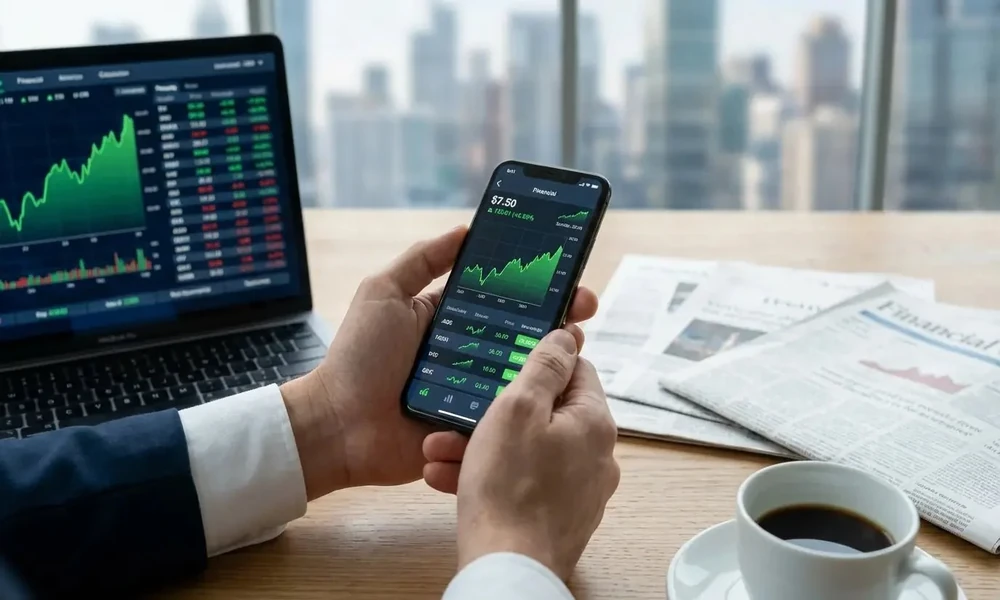
Trading apps have changed how users access stock markets, review price movements, place orders, and manage portfolios. Earlier, many investors depended on phone calls, physical forms, or desktop terminals. Today, a mobile app can provide market data, charts, watchlists, order placement, portfolio tracking, and fund transfers in one place.
However, using trading apps requires care. The ease of placing orders should not lead to rushed decisions. Users should understand market risk, order types, charges, account safety, and their own investment goals before trading. A well-designed app can support better decision-making, but the responsibility still remains with the user.
What Are Trading Apps
Trading apps are mobile platforms that allow users to buy and sell financial instruments such as stocks, exchange-traded funds, derivatives, commodities, or other supported products. These apps are usually connected to a demat account and trading account.
A user can search for stocks, check live prices, view charts, place buy or sell orders, and track holdings. Some apps also provide research tools, market news, alerts, and portfolio reports.
The purpose of trading apps is to make market access easier. They bring account management and order execution to a mobile screen, making trading more accessible for regular users.
Why Trading Apps Are Common Today
Trading apps are common because they reduce dependency on offline processes. Users can check prices and place orders from anywhere with internet access. This is useful for investors who want to monitor markets during working hours or manage their portfolio without visiting a branch.
Another reason is speed. Market prices move quickly, and users may need timely access to order placement. A trading app allows users to act faster than traditional methods.
Trading apps also provide information in one place. Users can review charts, order history, holdings, positions, margin details, and account balance without switching between multiple platforms.
Key Features Users Should Check
A trading app should have features that support clear market decisions. The app should not only allow order placement but also show useful data in a simple format.
Watchlists
Watchlists help users track selected stocks or instruments. A good app should allow users to create multiple watchlists based on sectors, strategies, or investment goals.
Market Charts
Charts help users review price movements. Basic charting tools may include time frames, volume, price patterns, and indicators. Users should avoid depending only on charts without understanding risk.
Order Types
Trading apps may support market orders, limit orders, stop-loss orders, and other order types. Users should understand how each order works before using it.
Portfolio View
A clear portfolio view helps users track current value, invested amount, profit or loss, and asset allocation.
Alerts
Price alerts can help users follow selected stocks without checking the app constantly.
Trading Apps and Account Setup
To use trading apps, users usually need a trading account and demat account. The trading account allows buying and selling, while the demat account stores securities in electronic form.
The account opening process may include PAN, Aadhaar-based verification, bank details, income proof for certain segments, and nominee information. Users should provide accurate details because incorrect information may create account or withdrawal issues later.
After account setup, users can add funds, search stocks, and begin trading based on app permissions and account activation.
How Trading Apps Support Market Tracking
Market tracking is one of the main reasons users install trading apps. Users can follow stock prices, index movements, sector performance, volume changes, and market depth.
Some apps also provide market news and corporate announcements. These updates can help users understand why a stock may be moving. However, users should verify important information before taking action.
In the middle of managing money through different financial tools, some users may also use digital wallets for small payments, while trading accounts should be handled separately with proper records and risk checks.
Charges to Review Before Trading
Trading involves costs. Users should review brokerage, transaction charges, securities transaction tax, GST, stamp duty, demat charges, call and trade charges, and other applicable fees.
Low brokerage may look attractive, but users should check the full charge structure. Frequent trading can increase costs, even when individual charges appear small.
Users should also check charges for account maintenance, fund withdrawal, pledging, and delayed payment, if applicable.
Risk Management While Using Trading Apps
Trading apps make transactions easier, but market risk remains. Prices can move against expectations, and users may lose money. Risk management is important for every trader and investor.
Users should avoid investing money needed for rent, school fees, medical needs, or essential expenses. They should decide the amount they can afford to risk before placing trades.
Stop-loss orders may help limit losses in certain trades, but they do not remove risk completely. Market gaps, volatility, and poor liquidity can still affect execution.
Common Mistakes Users Should Avoid
One mistake is placing trades without research. A stock trending on social media or a sudden price rise should not be the only reason to buy.
Another mistake is overtrading. Since trading apps are easy to access, users may place too many orders without a clear plan. This can increase costs and emotional pressure.
Users should also avoid using borrowed money for risky trades. Losses can become harder to manage when repayment obligations are involved.
Ignoring app notifications is another issue. Margin alerts, order rejection messages, corporate action updates, and fund-related alerts should be checked carefully.
Security Checks for Trading Apps
Security is important because trading apps handle financial data, account access, and market transactions. Users should set strong passwords and enable biometric login or two-factor authentication wherever available.
The app should be downloaded only from official app stores. Users should avoid APK files, unknown links, and login pages shared through messages.
Public Wi-Fi should not be used for trading or fund transfers. Users should also log out from shared devices and avoid saving passwords in unsafe places.
If a phone is lost, the user should contact the broker and block account access if required.
How Beginners Can Use Trading Apps Carefully
Beginners should first understand basic terms such as equity, demat account, holdings, positions, limit order, market order, stop loss, margin, and settlement cycle.
They can start by observing markets, creating watchlists, and reading company information before placing trades. Small and planned transactions are better than large decisions taken without experience.
Beginners should also avoid complex products until they understand the risk. Derivatives and leveraged trades may not suit every user.
Trading Apps for Long-Term Investors
Trading apps are not only for short-term traders. Long-term investors can use them to buy stocks, track holdings, review portfolio allocation, and monitor company updates.
A good app should help investors see performance over time. It should show invested value, current value, dividends, corporate actions, and tax-related reports where available.
Long-term users should focus more on business quality, valuation, financial performance, and asset allocation rather than daily price changes.
Conclusion
Trading apps can make market access easier by offering watchlists, charts, order placement, portfolio tracking, alerts, and reports from a mobile device. They are useful for both traders and long-term investors when used with proper understanding.
The best way to use trading apps is to combine convenience with discipline. Users should check charges, protect account access, understand risks, avoid rushed decisions, and maintain a clear trading or investment plan. A trading app is only a tool; better outcomes depend on research, patience, and responsible money management.
Frequently Asked Questions
What are trading apps?
Trading apps are mobile platforms that allow users to buy, sell, and track financial instruments through a trading and demat account.
Are trading apps safe to use?
They can be safe when users choose trusted platforms, enable security features, avoid unknown links, and protect login details.
Can beginners use trading apps?
Yes, beginners can use them, but they should first understand basic market terms, risks, order types, and charges.
What features should a trading app have?
Useful features include watchlists, charts, order types, alerts, portfolio tracking, reports, and secure login options.
Do trading apps charge fees?
Yes, trading may include brokerage, taxes, transaction charges, demat fees, and other applicable costs depending on the platform.