





Tariffs Are Rising — Here’s How to Pivot Without Sacrificing Margins
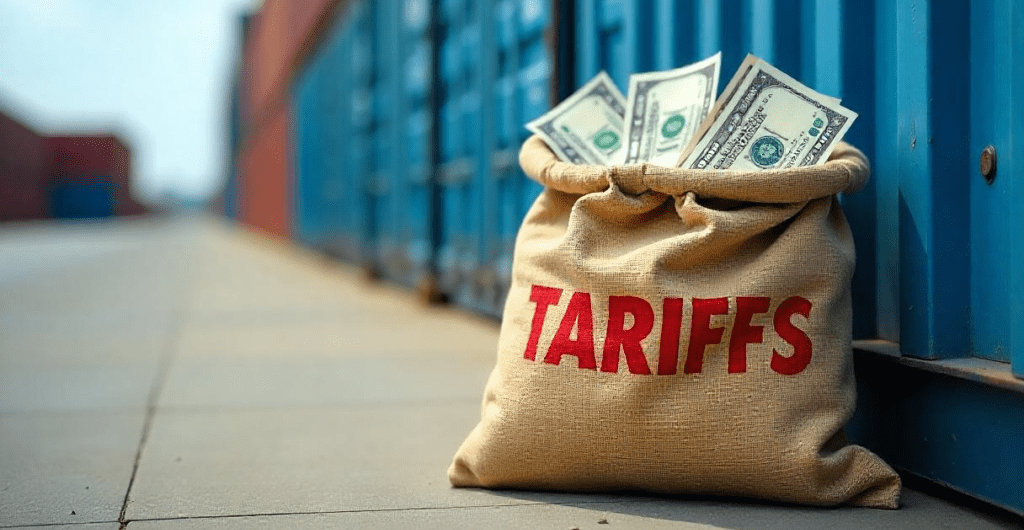
As 2025 unfolds, U.S. businesses are once again facing a familiar threat: tariffs. In the latest round of economic tension between the United States and China, the two countries have entered a 90-day truce meant to de-escalate new duties on imports. But make no mistake — the pressure is mounting. At the moment we write these lines (May 2025), talks currently float figures like 30% tariffs on China-to-U.S. goods and 10% for U.S. exports into China. And while most of the coverage focuses on physical products, the impact on services remains unclear.
For companies that manufacture tech-related goods — think smart home devices, wearable electronics, electric scooters, 3D printers, or smart medical tools — tariffs could cut directly into already-tight margins. These products rely heavily on skilled workers: engineers, designers, QA testers, firmware developers, and more. Even companies that don’t build physical goods but work in software, fintech, or marketing tech face indirect cost pressures as components, hardware, or infrastructure prices rise.
But here’s the good news: remote staffing and digital service operations remain unaffected by trade tariffs. Labor isn’t crossing borders physically, and no customs duties are being applied to your developer in Vietnam or designer in Thailand. For this reason, offshore staff leasing is emerging as a strategic tool—not just for saving money, but for protecting business continuity in uncertain times.
What’s Uncertain… and What’s Not
The truth is, no one knows where tariff negotiations will land. Some U.S. importers are stockpiling goods to avoid upcoming duties. Others are pulling out of China entirely, shifting supply chains to Vietnam or India. But while product-based businesses remain in flux, companies providing or consuming digital services have clarity: staffing digital roles abroad is still open, legal, and unencumbered by any new economic penalties.
If your company is in any of the following sectors:
- Consumer electronics or smart devices
- EdTech or MedTech
- Digital marketing or SaaS
- Robotics or industrial IoT
- Gaming, AR/VR, or digital design
…then your greatest assets aren’t just parts or tools — they’re people. And how you build your team could determine how well you navigate 2025.
Why Offshore Staffing Works — Especially Now
Adopting global staffing models — especially via offshore staff leasing — allows companies to scale strategically, cut costs, and avoid disruptions. Let’s take a deeper look at how this plays out in real-world terms.
1. Cost Efficiency: Smart Labor at a Fraction of the Cost
In the U.S., a full-time mid-level developer earns between $100,000 and $120,000 annually. In Southeast Asia, the same role — often with similar experience and English fluency — costs significantly less:
- Vietnam: Developers earn $10,000–$15,000/year
- Philippines: QA testers and support staff: $4,000–$8,000/year
- India: Full-stack engineers: $12,000–$18,000/year
- Indonesia: Graphic designers or marketers: $5,000–$7,000/year
- Thailand: UX/UI specialists: $8,000–$12,000/year
- Malaysia: Fintech and DevOps experts: $15,000–$20,000/year
Even with additional costs for management, HR, and infrastructure, many companies report savings of 60% to 80% per role, which cushions the impact of tariff-driven increases in other parts of the business.
2. Access to Skilled Talent: Not Just More Hands — Better Ones
Forget the old idea that outsourcing only works for repetitive tasks. Today, companies routinely outsource labor in Southeast Asia for complex work in software, design, testing, and analytics. The regional talent pool is young, tech-savvy, and increasingly specialized:
- Vietnam: Over 50,000 IT graduates each year. Major universities align their programs with tech industry needs.
- Philippines: A BPO powerhouse with over 1.3 million workers in customer support, finance, and digital services.
- India: Produces 1.5+ million engineering graduates annually, many with high-level certifications.
- Indonesia: Young, rapidly growing tech ecosystem with over 500,000 university graduates per year.
- Thailand: Strong in creative industries — animation, game development, and branding.
- Malaysia: A fintech and digital operations hub, with increasing emphasis on English-language instruction and cloud computing.
This means that roles like QA automation, firmware development, UX/UI design, ad campaign execution, and social media strategy can all be sourced abroad — without lowering your standards.
3. Scalability: Build Teams That Match Your Growth
Whether you need 2 developers for a 6-month MVP or a 20-person QA team for product launch, offshore staffing gives you the flexibility to adjust without committing to long-term office space, benefits, or employment taxes in the U.S.
For example, a U.S.-based edtech firm recently scaled their remote team in the Philippines from 5 to 25 support agents in just under 8 weeks — a move that would have taken 3–4 months domestically.
With staff leasing, your offshore partner handles contracts, HR, compliance, and infrastructure — letting you scale up or down on demand.
4. Strategic Focus: Free Up U.S. Teams for Innovation
Hiring offshore for executional tasks means your in-house team can stay focused on what matters most: product innovation, customer relationships, and market growth. Offshore teams can handle:
- Code maintenance and bug testing
- Landing page design and optimization
- Content scheduling, keyword research, and reporting
- App testing across devices and platforms
- Social media ad setup and localization
One U.S. SaaS startup used remote staff in Thailand for ongoing ad operations while their U.S. team focused on messaging, customer journeys, and analytics — resulting in a 35% increase in campaign speed.
5. Risk Diversification: Don’t Bet Everything on One Location
Beyond cost and talent, offshore staffing reduces operational risk. Just like investors diversify portfolios, smart businesses diversify their teams geographically. Here’s how:
- Philippines for voice support and QA
- Vietnam for front-end and back-end development
- India for infrastructure, APIs, and databases
- Indonesia for marketing execution
- Malaysia or Thailand for design, branding, and creative work
If one region is impacted by political shifts, currency volatility, or local crises, you have backup capacity elsewhere.
The Bottom Line
Tariffs will likely continue to disrupt physical supply chains and add pressure to goods-based businesses in 2025 — especially those dealing in high-tech, regulated, or customized items. But your labor strategy doesn’t have to suffer.
Offshore staffing gives you a competitive edge:
✔️ Lower costs
✔️ Higher flexibility
✔️ A global, specialized workforce
✔️ Business resilience in uncertain times
While the global trade environment remains volatile, digital talent is still moving freely across borders — and smart businesses are already taking advantage.