



The High-Flying Secrets of Precision with CNC Machining Aerospace Parts

Key Takeaways
- CNC machining of aerospace parts ensures mission-critical safety through micron-level tolerances.
- The strategic benefits of modern CNC machining services start with rapid prototyping and extend to sustainable manufacturing.
- Role model companies in the aerospace sector prioritise Industry 4.0 and multi-axis technology.
- The principle of reinvention in engineering workflows leads to long-term success and material efficiency.
Introduction
In the aerospace industry, the margin for error is nonexistent; every bracket, turbine blade, and fuel nozzle must be a masterpiece of engineering. This is why CNC machining of aerospace parts has become the cornerstone of modern aviation. Unlike traditional manufacturing, Computer Numerical Control (CNC) offers a level of repeatability and precision that is humanly impossible to achieve by hand. The reliance on high-fidelity CNC machining services is about ensuring that every take-off is followed by a safe landing. By integrating advanced software with heavy-duty machinery, manufacturers can transform a block of aerospace-grade titanium into a complex, flight-ready component with surgical accuracy.
Setting the Standard in Aerospace Precision
In the world of precision engineering, certain organisations set the benchmarks for the rest of the industry to follow. These leaders are not defined by their size, but by their unwavering commitment to quality standards. A true role model in this field understands that CNC machining of aerospace parts requires a culture of zero defects. They invest heavily in Coordinate Measuring Machines (CMM) and 3D optical scanning to verify every micron, ensuring that their output serves as a blueprint for reliability.
These role-model companies also demonstrate the power of mentorship and expertise. The best CNC machining services are those that have reinvented their training routines. They blend the seasoned wisdom of veteran machinists with the tech-savviness of a new generation. This synergy allows the successful adoption of complex technologies like 5-axis and 9-axis turn-mill centres. When a junior engineer watches a mentor program a complex toolpath for a blisk (bladed disk), they are absorbing a philosophy of precision that safeguards the future of the entire aerospace supply chain.
Creating a Sustainable Routine for Long-Term Engineering Success
For a manufacturing facility to thrive, it must move beyond sporadic bursts of innovation and instead cultivate a sustainable routine. In the context of CNC machining services, sustainability refers to both environmental responsibility and operational consistency. Long-term success is strengthened when a workshop develops a rhythmic, predictable workflow that reduces friction. By predicting a failure before it happens, a factory maintains a steady output, ensuring that clients receive their CNC machining for aerospace parts without the delays caused by unplanned downtime.
Sustainability also means re-evaluating our impact on the planet. The aerospace sector is notoriously material-intensive, often working with expensive alloys. A sustainable routine incorporates Design for Manufacturability (DFM) to ensure that the buy-to-fly ratio is as efficient as possible. By using advanced nested toolpaths and recycling metal chips, modern CNC machining services turn waste reduction into a core KPI. This commitment to efficiency builds a resilient brand reputation that attracts partners who value ethical and intelligent production.
Why Precision is Non-Negotiable
To understand the importance of CNC machining aerospace parts, one must consider the extreme environments these components inhabit. A turbine blade in a jet engine must withstand temperatures that exceed its own melting point, all while spinning at thousands of revolutions per minute. At these speeds, even a microscopic imbalance can lead to catastrophic vibration and engine failure. Precision machining ensures that mass is distributed perfectly across the component, maintaining the structural integrity required to survive these centrifugal forces. This level of detail is only possible through multi-axis CNC technology, which allows the cutting tool to approach the part from virtually any angle, creating organic, aerodynamic shapes that were once thought impossible.
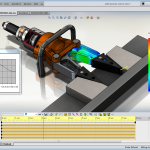
Furthermore, the integration of digital twins has changed the game for CNC machining services. By creating a virtual replica of the machining environment, engineers can simulate the entire cutting process before the first chip of expensive titanium is even removed. This prevents clashes or tool breakages, ensuring that the final physical part is a perfect mirror of the digital design. This marriage of high-level physics and digital simulation allows aerospace companies to push the boundaries of what is possible, from hypersonic travel to deep-space exploration.
Conclusion
The world of CNC machining aerospace parts is one where art meets science under the strictest of conditions. Whether it is through the adoption of 5-axis technology or the strategic reduction of material waste, the best CNC machining services are those that view themselves as partners in their clients’ success. As aviation continues to evolve, the demand for precision will only grow, and choosing a sophisticated manufacturing partner is the most important decision an aerospace engineer can make.
Looking for a partner who understands the complexities of flight-critical parts? Enquire at Disk Precision and collaborate on your next mission-critical design today.