





Optimizing Production Lines Using Air Knife Drying

The contemporary factory setting revolves around efficiency, consistency and cost management as the key factors to remaining competitive. The air knife drying system is one of the technologies that have received more and more attention due to its capability to enhance the production processes by providing a fast non-contact approach to product and component drying, to eliminate moisture, debris, and contaminants. The adoption of this system in production lines will enable manufacturers in various industries to increase the quality of the output produced while lowering the cost of operation.
The Principle of Air Knife Drying Technology
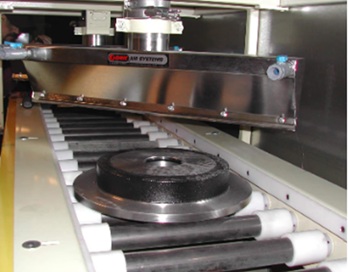 The air knife drying system involves a high velocity, uniform sheet of air which is used to blow off liquid, dust or other particles on surfaces. Furthermore, air knife drying system are used to dry food as opposed to the conventional drying techniques, where heating or absorbent materials are used, and the moisture is removed by direct contact. This also endears them to sensitive products or surfaces that may not resist mechanical wiping or high heat. The air knives are usually operated with compressed air or blowers depending on the demand and efficiency of the use. Its design can permit a steady airflow throughout the width of the product and even at a pace of high production this product has been designed to dry uniformly.
Increasing the speed of Production Lines
The first and possibly the most direct advantage of the air knife drying system is that it has the ability to accelerate the speed of the production line. Conventional ways of drying can take long dwell times and therefore hinder the speed of operations and lead to bottlenecks. Water or residue is eliminated by air knives almost immediately, so the products do not wait to be transferred to the next phase of processing.
This speed of drying is particularly useful when large volume manufacturing is involved, and even the slightest saving of time per part can lead to a tremendous productivity increase over the span of a day or year.
Increasing Product Quality and Consistency
Waters that are left on the products after washing, coating, or rinsing may cause defects like spotting, streaking, corrosion or contamination. An air knife drying system can help eradicate these problems by offering the required uniform coverage of drying all the surfaces.
Even drying is very useful in increasing the overall appearance of a product and also decreasing the difference between units. Air knife systems are also important in preserving quality in the case of an industry which requires high precision and consistency as is the case in electronics, automotive components and food packaging.
Air knife drying systems are very versatile and can be tailored to meet a very broad variety of manufacturing specifications. They can be installed horizontally, vertically or at angles to suit variable product sizes and conveyor design. The airflow and pressure settings can be adjusted to enable manufacturers to adjust performance according to the type of material and moisture content. The bottles and containers are used commonly to dry them, rinsing machined parts, rinsing metal sheets, and cleaning dust off the packaging materials.
Improving Safety and Sustainability at the Workplace
Air knife systems help to reduce the use of the heated drying techniques that are associated with the risks of injuries. Reduced surface temperatures decrease risk of burns whereas decreased moisture storage on floors reduces slips and falls.
Environmentally, air knife drying systems contribute towards the sustainability of energy consumption and waste reduction. Their durability and low consumable rates are correlated to the attempts to minimize the environmental impact of the manufacturing processes.
Due to the further development of manufacturing processes, the use of technologies that would facilitate speed, quality, and sustainability becomes more precious. The air knife drying system offers a viable and efficient way to dry and to eliminate moisture and contaminants without slowing down the production process or damaging the product. Through the integration of this technology in production lines, manufacturers would be able to attain a high level of efficiency, high level of consistency and long-term benefits of production.


