



Where Does Airline Cargo Lose Temperature Control During a Heatwave?
Temperature-controlled air freight containers
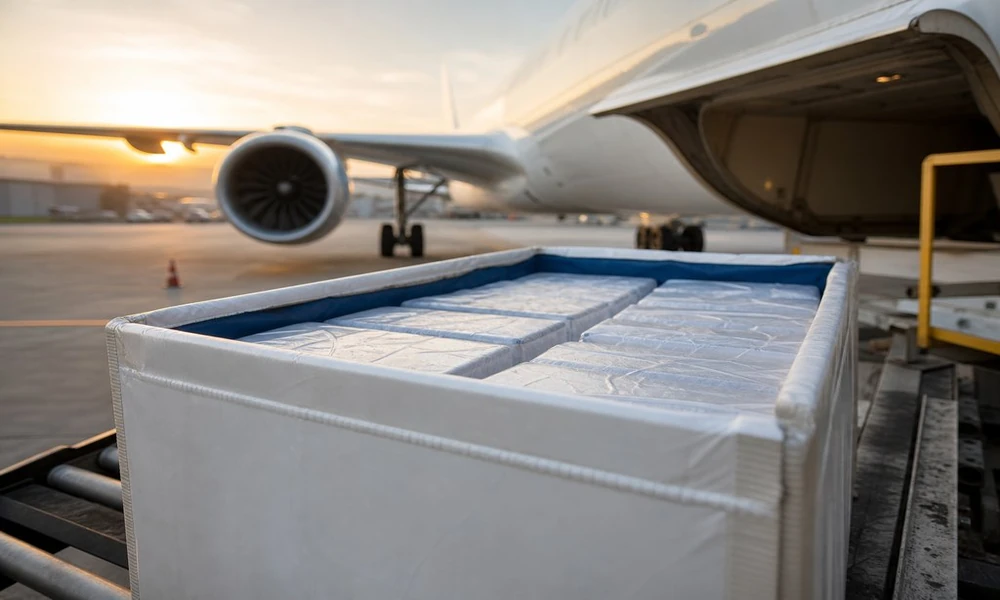
Passive thermal shippers (conditioned insulated shippers) use no external power source and can incorporate phase change materials (PCMs), gel packs, dry ice and other conditionable insulation panels to maintain temperatures within a desired range for a period of time. Proper conditioning and an understanding of product needs and transit times are important considerations to help ensure success.
Active temperature control shipping containers use active powered temperature control units (heating and/or cooling) to maintain a desired temperature range for an extended period of time. Planning considerations include ensuring availability of active shippers, charging of active shippers, checking batteries in active temperature monitoring/recording devices and ensuring awareness and understanding of the special handling requirements by all personnel coming in contact with the active shippers (particularly at airports).
Heat Exposure
Heat wave in San Jose – pharmaceutical air cargo leaves plant with summer temperatures forecast throughout the route. Where could the shipment be exposed to the greatest risk?
Gold Rush Express Delivery 910 Bern Ct #150, San Jose, CA 95112, United States (408) 292-7300 Official site: Gold Rush Express Delivery website for local contact information.
Think beyond the flight – qualified packaging should be validated/qualified with your anticipated use cases in mind – consider all scenarios from the time the product leaves the manufacturer to when it is received at its final destination – trucks, loading docks, airports, weather during a heat wave (particularly during a heat wave!), etc. Active temperature control shippers may be a better choice for higher value therapies and/or particularly challenging routes/scenarios.
Airport Dwell Times
Wanting to beat potential late afternoon/evening traffic snarls, a pharmaceutical air cargo consignment leaves the shipping facility well ahead of the cutoff time to turn the freight over to the airline. The airline accepts the freight through its Airline Cargo department and places it in its warehouse pending loading onto the aircraft. Questions to consider:
- What is the acceptance time with the Airline Cargo department? Do receiving hours match up?
- What are the temperature requirements for the product/packaging system?
- What is the maximum amount of time that your product/packaging system can spend outside of refrigerated storage? (This may be spelled out in your shipping procedures/SOPs – some products cannot be left in ambient conditions for more than 30 minutes without initiating an escalation process.)
- Will the freight be placed in an area that is temperature controlled? If so, what are the operating parameters for this area?
- How will the freight be transferred from the warehouse to the aircraft?
- Who can you contact if the freight is not loaded on time/the cutoff time is missed/the airline calls after hours to let you know there is going to be a delay?
- Where are your data loggers located? How do you plan on collecting/downloading the data?
Connections and Excursions
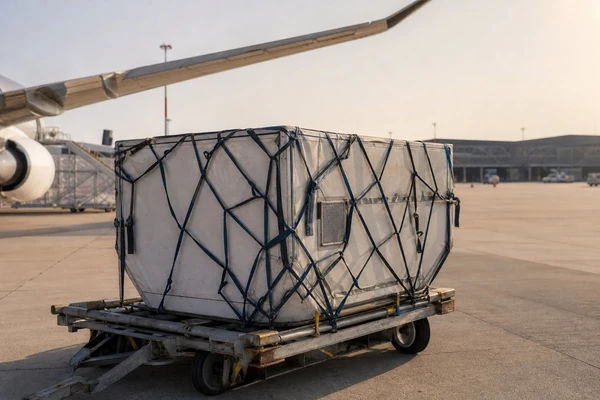
Insulated air cargo shipping container
Your consignment will be deplaned, go through a transfer screening process, potentially be placed in temperature controlled storage (hopefully!), and then built-up and loaded on to the next flight. Delays may also result in your freight being placed on a different gate/aircraft. As with direct flights, consider the conditions that your freight will be exposed to during build-up/loading. Extreme summer temperatures, including the heat-wave conditions described by climate.gov/news-features/understanding-climate/understanding-climate-heat-waves, can make even short connections challenging. On the flip side, even lengthy connections can potentially place your freight/product at risk if proper temperature controlled storage is not in place.
Before booking your airfreight, make sure that you understand where/how your freight will be handled during a connection. In particular, find out if it will remain in a temperature controlled facility, or if it will be in a non-controlled area while awaiting transfer from one Airline Cargo department to the next. If the incoming flight is delayed, who makes the decision to continue processing your freight? Will it be placed in temperature controlled storage? Will it be put on hold pending further instructions?
If an excursion/delay is suspected, don’t panic! Follow your company’s established procedures. Don’t throw away your packaging, data loggers, etc.! Don’t reset your data loggers! Don’t automatically assume that your product has been compromised – outside/ambient temperatures may not be representative of the temperatures actually experienced by your product.
Gather as much information as possible – airline delay notifications, delivery/receipt information (time your freight left your facility; time your freight was received at it’s final destination), AWB numbers, names/titles of individuals that had custody of your freight, a description of your packaging system, the location of any data loggers, photos of your product/freight, notes regarding transfer/connection times, etc. This information may prove valuable during any subsequent investigation.
Depending on the results of any data loggers used and the specifics of your product’s stability program, it may or may not be possible to work your freight back into compliance (i.e. your product has an established excursion time that can accommodate the actual excursion experienced). In some cases, the product/freight will need to be quarantined pending further review/investigation by Quality and other members of your team.
Flying the freight is only one component of a successful summer shipment. Be sure to give equal consideration to all hand-off points along the way!