


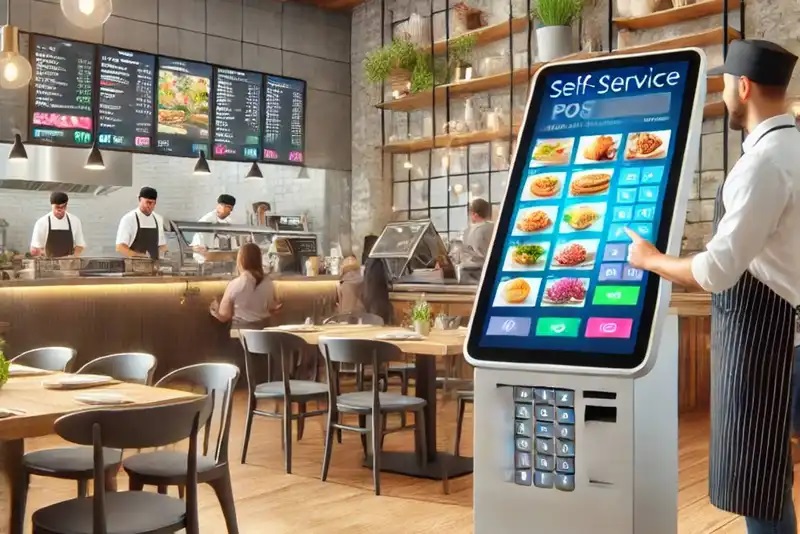



Why Self-Service Kiosks Are Reshaping the Quick Service Restaurant Experience in the US
A Practical Shift in Restaurant Operations
Quick-service restaurants in the United States are under constant pressure to serve customers quickly, accurately, and consistently. High-traffic periods, evolving customer expectations, and operational demands all require systems that can support fast-paced environments without creating unnecessary friction. One of the most effective tools helping restaurants respond to these challenges is self-service kiosks.
Rather than changing the core nature of quick service dining, these digital ordering points support the existing model by making it easier for customers to place orders independently and for staff to manage service more effectively. Their growing role in US restaurant environments reflects a broader shift toward practical digital tools that improve flow, clarity, and overall efficiency.
Supporting Faster and More Structured Ordering
In busy restaurant settings, ordering speed directly affects customer satisfaction and operational performance. Traditional counter service can become congested during peak hours, especially when menus are large or orders include modifications. Kiosks help address this by creating additional ordering points within the same space.
Customers can move through the process at their own pace, review options clearly, and confirm their selections before payment. This helps create a more structured interaction and reduces the pressure that often comes with ordering verbally in a fast-paced environment. The result is a smoother start to the service journey and a more manageable front-of-house flow.
Improving Accuracy in High-Volume Environments
Accuracy is a major concern in quick-service restaurants, particularly when volume is high and timing is tight. Misheard orders, missed modifications, or rushed communication can all affect service quality and create avoidable waste. Digital ordering reduces those risks by allowing customers to enter their own selections directly.
With menu items displayed visually and options presented in a step-by-step format, kiosks support clearer ordering and fewer misunderstandings. This consistency helps restaurants maintain better order quality and reduce the need for corrections or remakes, which in turn supports both operational efficiency and customer satisfaction.
Creating Better Use of Staff Time
Self-service kiosks do not remove the need for staff. Instead, they help restaurants use staff time more effectively. When routine ordering tasks are shared across digital touchpoints, team members can focus more on preparation, handoff, and direct customer support where it matters most.
This is especially useful during rush periods, when staffing resources need to be applied carefully. By reducing pressure at the counter, kiosks help balance workloads and support a more stable service environment. Staff remain an essential part of the guest experience, but their efforts can be directed toward higher-value interactions rather than repetitive order entry.
Matching Modern Customer Expectations
US consumers are already accustomed to digital interactions in many aspects of daily life. Mobile banking, online ordering, touch-screen check-in, and app-based services have all helped shape expectations around speed and convenience. In this context, digital ordering in restaurants feels familiar rather than disruptive.
Kiosks align with these expectations by offering a predictable, user-friendly interface that supports independent action. For many customers, this kind of autonomy is a benefit. It allows them to browse menus without pressure, make changes easily, and complete the process with confidence. In fast service settings, that control can contribute significantly to a better overall experience.
A Reliable Fit for Modern QSR Environments
The long-term value of kiosks in quick-service restaurants stems from their practicality. They support ordering, improve flow, reduce confusion, and work alongside existing systems rather than replacing them. Their role is not based on novelty, but on how well they address everyday restaurant needs.
In locations where speed, clarity, and consistency are essential, digital kiosks have become a reliable part of the service model. Their continued use across the US market reflects a clear operational benefit and a close fit with customer behaviour.
Conclusion
Self-service kiosks are reshaping the quick-service restaurant experience in the US by improving order flow, enhancing accuracy, and helping staff work more effectively. They create a more structured and predictable experience for customers while also helping restaurants manage high demand more efficiently. As the quick service sector continues to evolve, kiosks remain a practical and increasingly important part of how modern restaurant environments operate.


